Quiet Home Gym Equipment for Upstairs Apartments
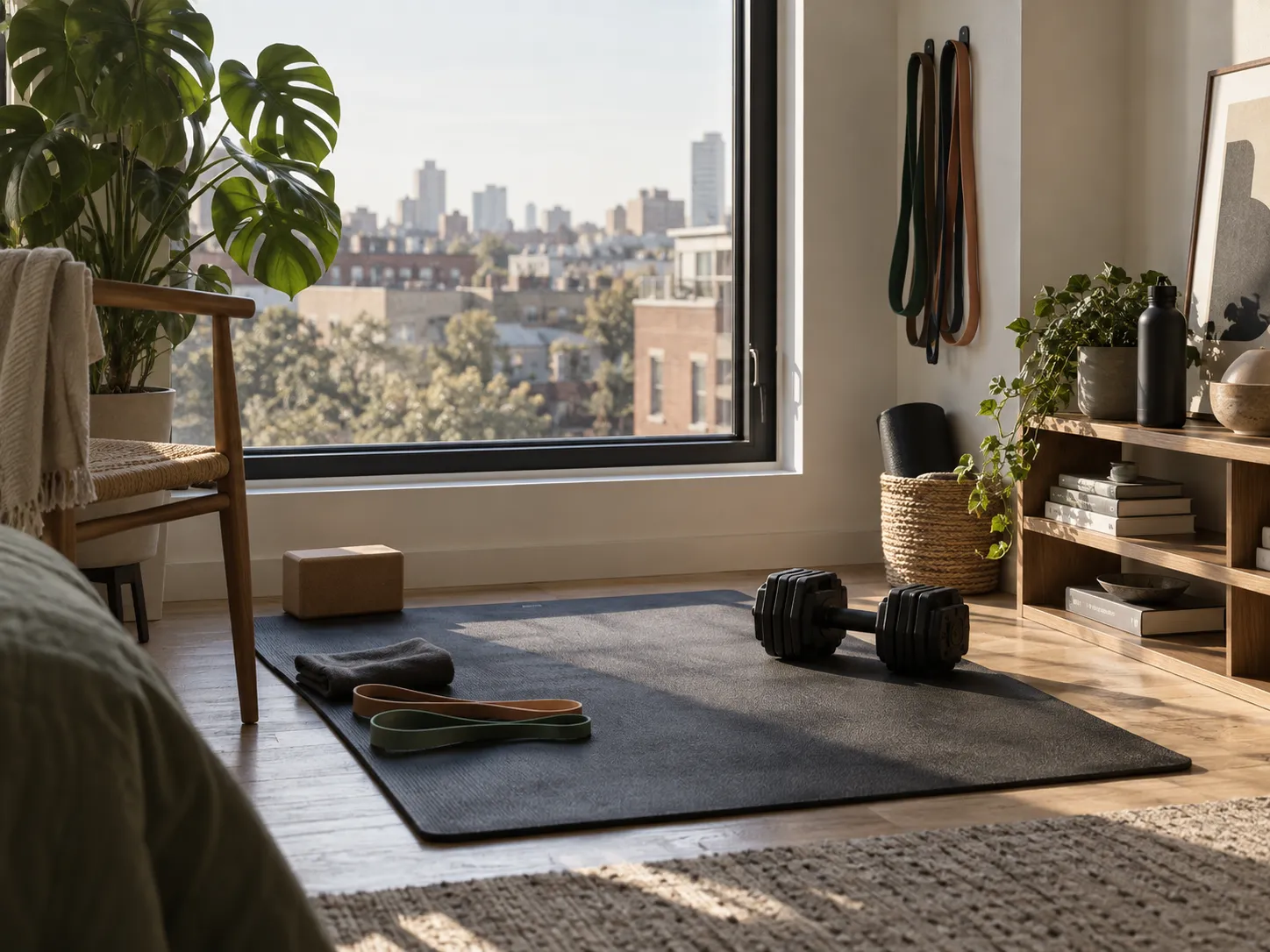
Training upstairs means every rep has a downstairs audience. This is how to lower the noise and the vibration that travels through the floor — as much as a small apartment practically allows.
The Upstairs Problem
If you live above someone, you know the feeling: you finish a set and pause, listening for a knock that doesn't come but might.
The problem isn’t that you’re loud. It’s that upstairs, sound has somewhere to go: down. A dropped weight or a jump lands on the floor and travels into the ceiling below as a dull, structural thud — the kind that carries through a building far better than music or conversation. Your neighbour doesn’t hear your workout. They hear your floor.
That’s the constraint we build around — not “get quiet,” which is a promise no equipment can keep, but reducing how much sound and vibration you send downward. You won’t make an apartment soundproof, but you can make it far easier to live above someone while still training seriously — which, if you’ve been holding back out of guilt, is the whole point.
This is the noise-focused companion to our first guide, 7 Pieces of Home Gym Equipment That Actually Fit in a Small Apartment. That one was about fitting. This one is about coexisting.
What Actually Makes Equipment Quieter
There are two kinds of sound, and this guide is mainly concerned with one.
The first travels through the air: talking, music, a fan, and some equipment noise too. Airborne sound can still matter, but this guide focuses on the floor-transmitted impact that makes upstairs training a different problem.
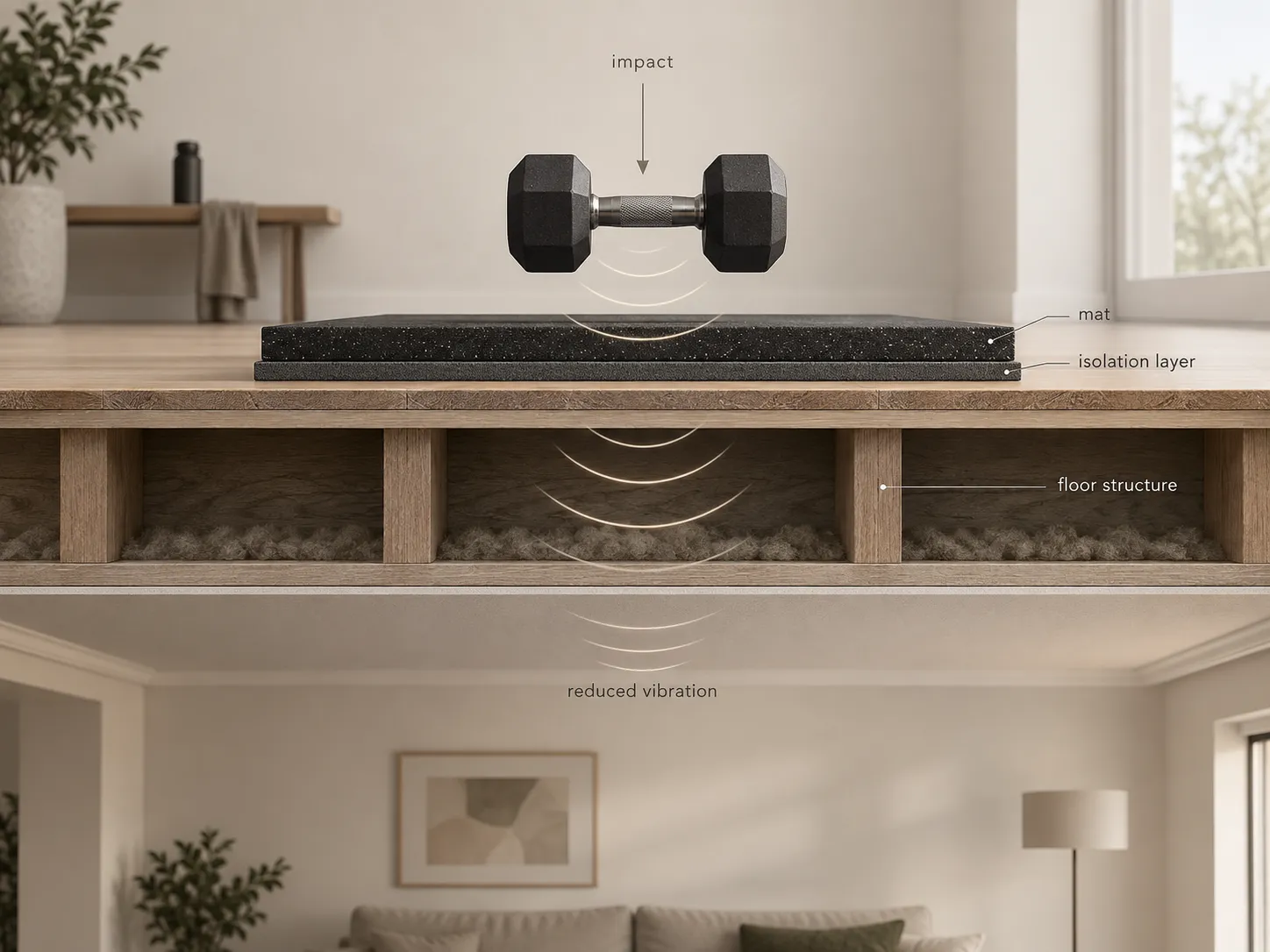
The second is the one that matters upstairs. It starts as a physical impact — a weight meeting the floor, a body landing from a jump — and travels through the building’s structure as vibration, out of your neighbour’s ceiling as a thud they feel as much as hear. Thin apartment floors can transmit this effectively, and it’s what nearly everything here is designed to avoid.
So when a product is called “quiet,” ask: quiet how? A dumbbell can be silent in your hand and still shake the floor the moment you set it down carelessly. Resistance from a band, a cable, or magnetic tension typically produces much less impact noise, because the movement is continuous rather than landing. The goal isn’t equipment that’s quiet in your hands — it’s equipment that stays quiet at the floor.
Quiet Equipment, Category by Category
We're organising by category rather than a fixed count, because "quiet" is a filter, not a shopping list.
Here are the categories that tend to pass it.
Resistance bands + door anchor
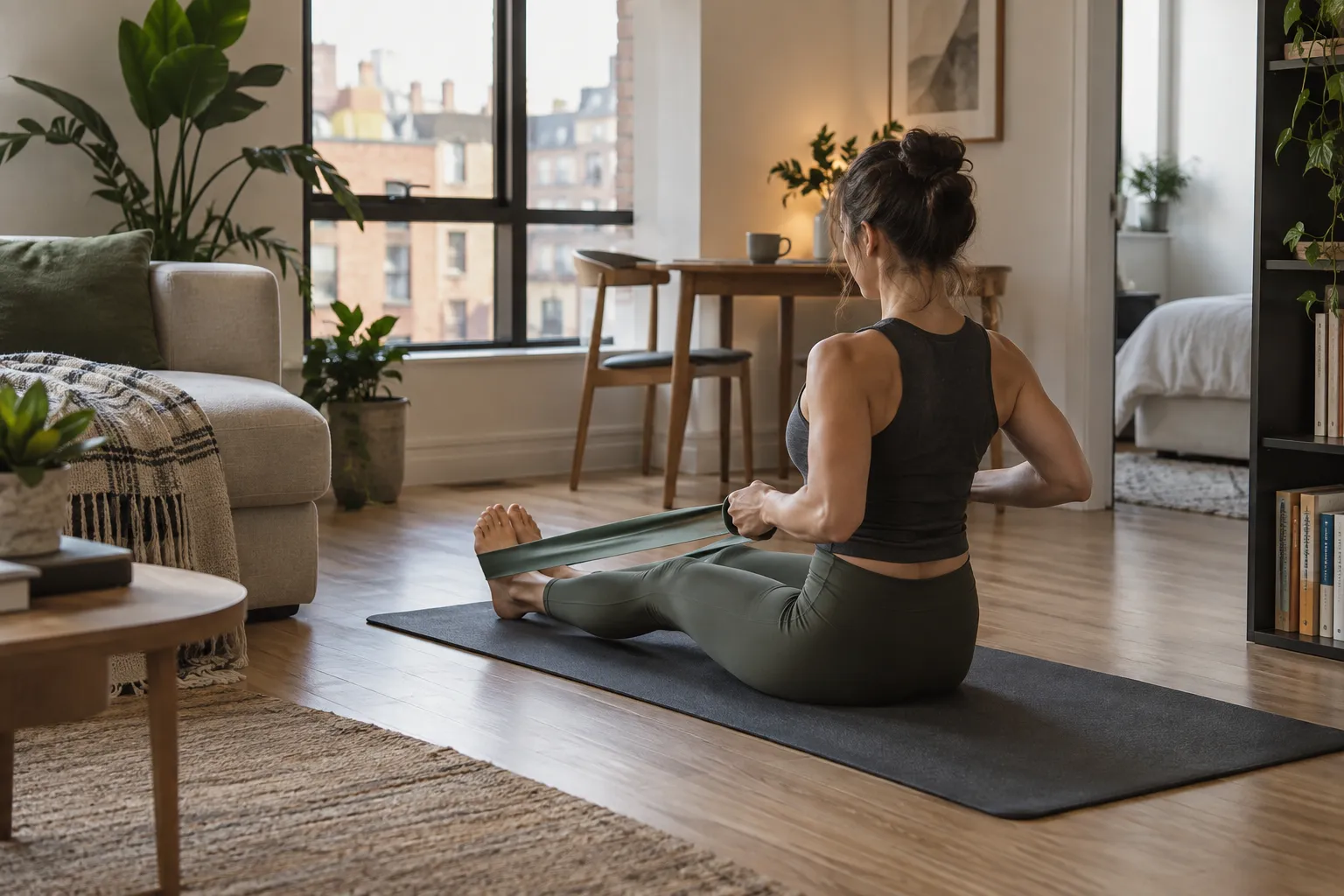
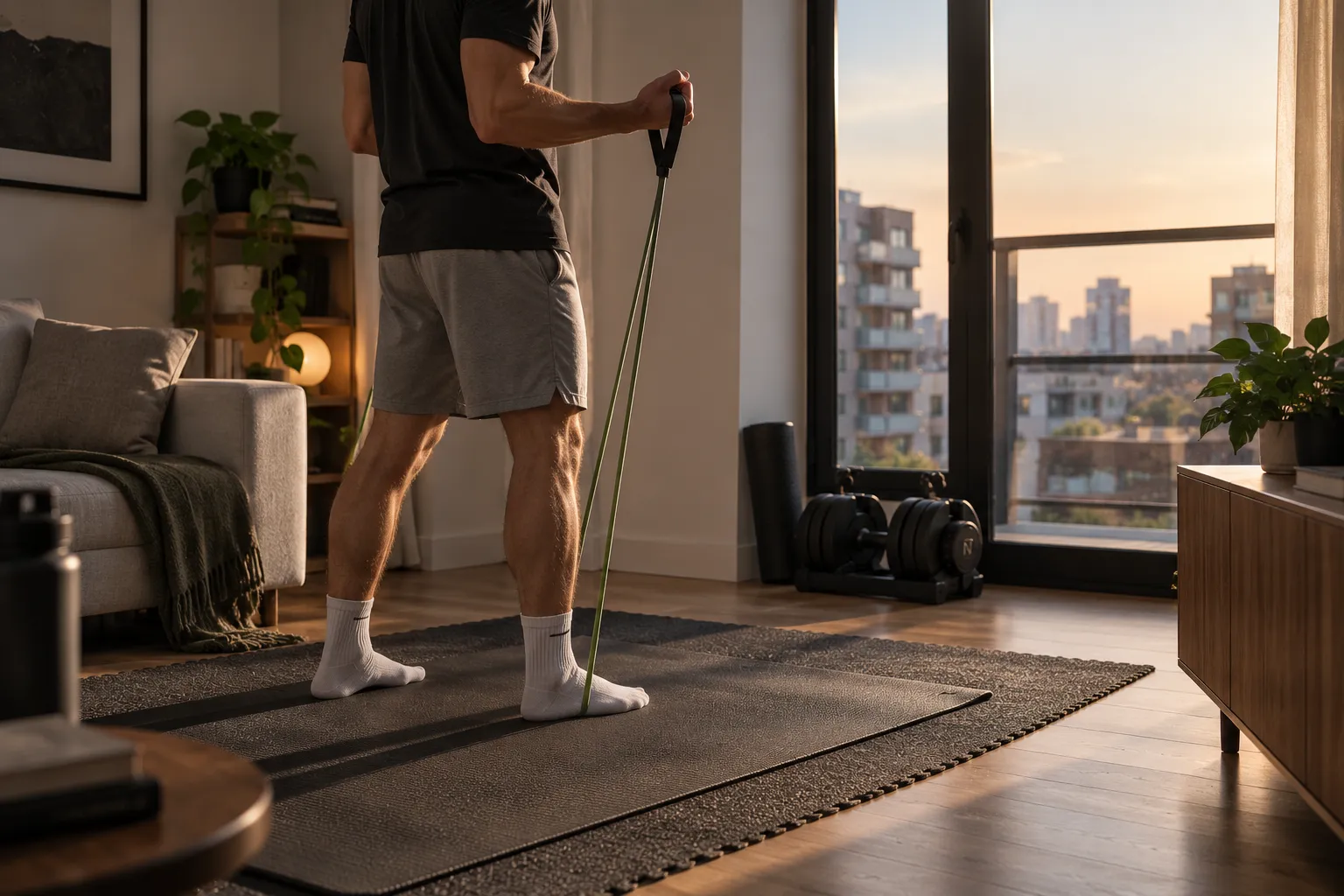
Bands are about as close to silent as strength training gets. The resistance comes from tension rather than mass, so there's no weight to drop — a single set covers pulls, presses, and rows with very little floor impact, anchored to a door with nothing mounted or permanent.
a door anchor with a sleeve wide enough to spread pressure across the frame, and bands you can grip comfortably that won't snap back toward you.
resistance caps out lower than free weights for some lifters, and the strength curve feels different — hardest at full stretch. For many upstairs trainers, that trade is easily worth it. A door anchor leaves no holes, so this setup is also the backbone of the no-drill approach in our guide, How to Build a Home Gym Without Drilling Into Your Walls.
Quiet / rubber-coated adjustable dumbbells
Adjustable dumbbells solve the space problem, and coated ones help with noise — a rubber or urethane coating softens both the sound and the mark on set-down. How tightly the mechanism holds together matters just as much.
coated contact surfaces, a locking mechanism with no audible slack when you shake it, and a shape that sits flat and stable when placed down rather than rolling or clattering.
they're still mass, so they remain the item most likely to make impact noise if dropped — coating reduces the sound, it doesn't remove it. Handled with control, they're among the most versatile quiet options you can own; our first guide covers them in more depth.
Coated kettlebell
A single coated kettlebell earns its space because most of what it does — swings, carries, cleans, presses — is continuous rather than impact-based. A coating quiets the metal and softens the inevitable set-down.
a coated base where it meets the floor, a smooth handle without a coarse seam, and a weight you can control through a full swing — an out-of-control kettlebell is a loud one.
technique matters more here than with most gear — learn to place it down rather than drop it, and much of the noise concern goes away. One well-chosen weight goes a long way; a rack doesn't belong upstairs.
Suspension & bodyweight accessories such as sliders
Some of the quietest tools barely register as equipment. Suspension trainers and sliders add real difficulty using only your own load, so very little impact reaches the floor — sliders move across it rather than into it.
sliders sized and surfaced for your flooring (carpet and hard floor use different sides), and, for suspension trainers, an anchor option that doesn't require drilling — a door anchor again does the job in a rental.
these load your own bodyweight, so progression comes from leverage and tempo rather than added resistance. Upstairs, that ceiling is often a feature, not a flaw.
Magnetic-resistance cardio
Cardio is where upstairs setups usually get loud, and where the machine type matters most. Magnetic resistance (rather than fan or friction) creates load without anything striking or rushing, so the mechanism itself stays quiet. But that's only one part: total noise still depends on the drive system, the frame, the floor beneath it, maintenance, and use — a magnetic machine on a bare floor, or one that's loose or poorly maintained, can still transmit plenty. Treat "magnetic" as a starting point, not a guarantee.
a drive described as low-noise, a stable frame that won't knock or creak under you, and a footprint that fits your space in use, not just in storage — with a mat underneath.
these are the largest items here, and cardio that relies on jumping, stomping, or a heavy fan is the opposite of what you want upstairs.
What We'd Avoid Upstairs
Being honest about what not to buy is part of the job. A few categories cause more trouble than they’re worth on an upper floor: bare metal weights and iron plates that ring and land hard; anything built around jumping, dropping, or slamming; fan and friction cardio, loud in the air and through the frame; and full barbell-and-rack setups, where loading a bar eventually means setting it down heavy — upstairs, exactly the sound you’re trying to avoid. None of these are wrong in the right room. Upstairs just isn’t that room.
The Floor Is Half the Battle
Here's the part most equipment lists skip: you can buy the quietest gear on the market and still get a complaint, because the floor decides how much impact reaches your neighbour.
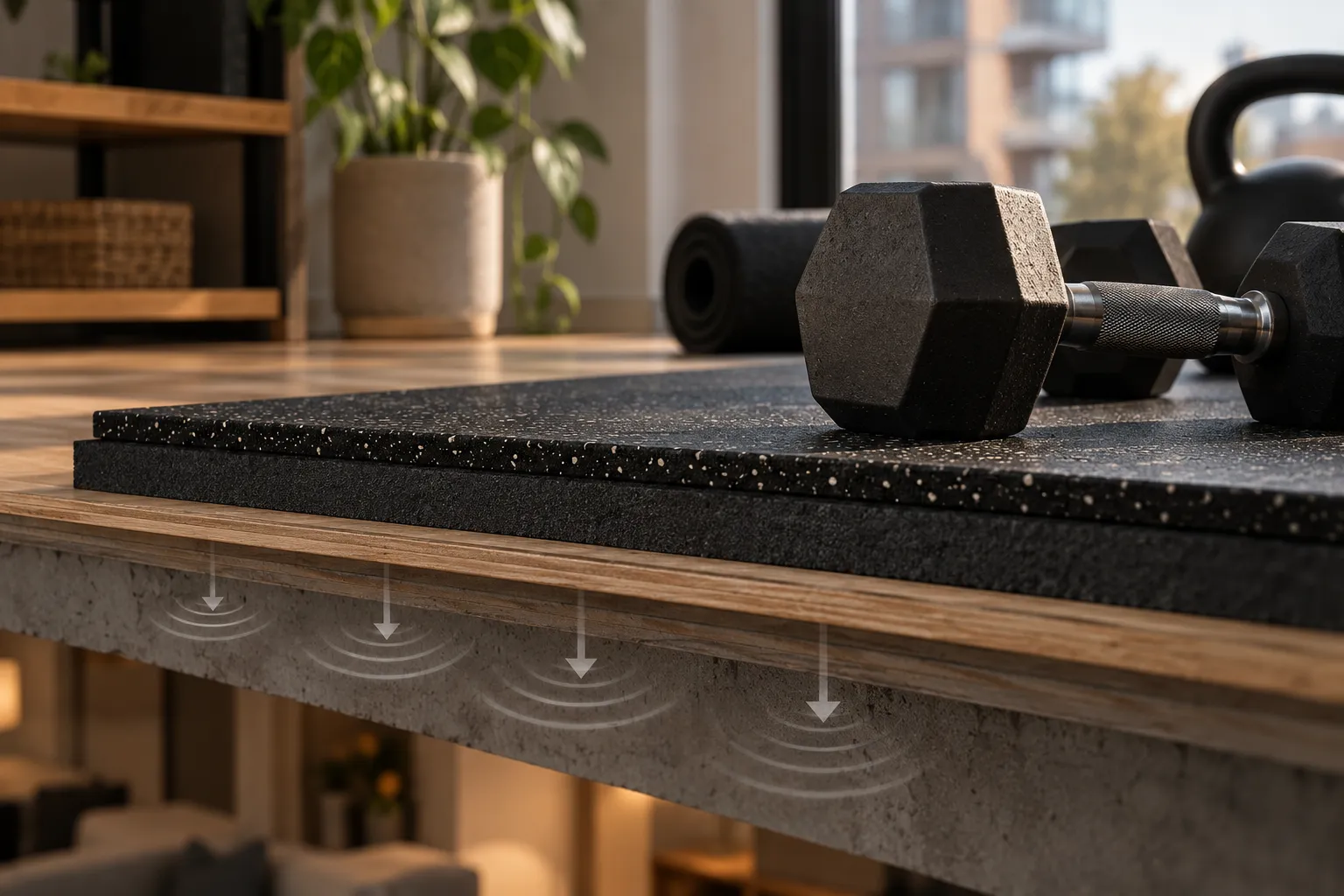
Reduce what it transmits, and everything you own gets quieter for free. The fix is layers between your equipment and the structure. A dense exercise mat is the baseline — not thin foam, but a firm rubber mat that absorbs rather than bounces. Under a cardio machine or a dumbbell station, vibration-isolation pads add another layer, decoupling the equipment from the floor so vibration loses energy before it reaches the floor structure. Between a weight set down on bare floor and the same weight on a proper mat, the right layers can make a meaningful difference. Behaviour is the other half: the same mat does nothing if you still drop instead of lower. Setting a weight down under control, onto a surface designed to absorb it, is one of the most effective quiet-training habits there is — and it costs nothing.
Quiet-Training Rules
Equipment gets you most of the way; these habits close the gap, and none cost anything.
Lower, don't drop: place every weight down under control, onto a mat.
Trade explosive for tempo: where a movement wants to be fast and hard-landing, slow it down so time under tension replaces impact.
Respect the clock: save the heaviest, most floor-loaded work for daytime, not when a single thud carries furthest.
Never train bare-floor: no mat down, no session.
And keep it packable — quiet gear tends to put away, and being able to clear it means you'll actually use the space. We'll cover how in our forthcoming guide, The Best Ways to Store Weights in a Small Apartment.
Control the impact. Keep the floor calm.